
ADA PN100 – P1-ből impulzust a PLC-nek
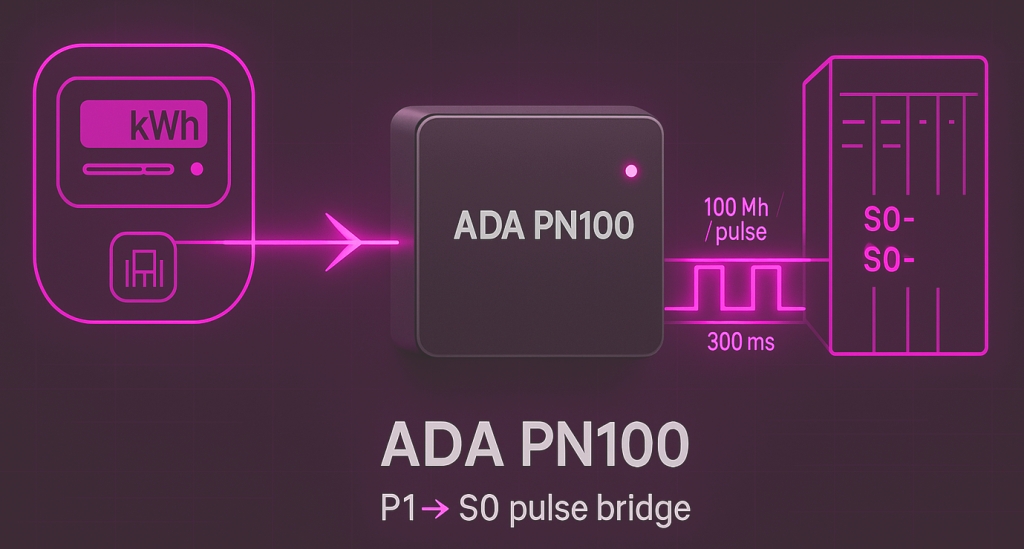
Régi jó S0/impulzus kimenetet szeretnél az okosmérőkből? Az ADA PN100 pont ezt csinálja: a villanyóra P1 (DSMR) portjáról olvassa az energiát, és programozható impulzusokat ad a PLC/SCADA számlálóbemenetére – pont úgy, mintha egy klasszikus kWh-mérő S0 kimenetét kötnéd rá.
Mire való?
-
Híd az új és a régi világ között: a modern okosmérők P1 portja szöveges adatot ad; sok ipari rendszer viszont impulzust vár. A PN100 ezt a P1-adatot impulzussá alakítja (pl. 100 Wh/impulzus).
-
Egyszerű bővítés: nem kell meglévő PLC-programot átírni, a PN100 a régi “kattogós” számlálót utánozza – csak csendben és pontosan.
-
Pont ott számol, ahol kell: gyűjtés, elszámolás, fogyasztói profil, al-mérés – mind ott maradhat a meglévő ipari logikában.
Hogyan működik röviden?
-
A PN100 az okosmérő P1 portjáról (DSMR) beolvassa az 1-0:1.8.0 (összes import kWh) vagy tetszőlegesen választott OBIS értéket.
-
A mért növekményt összeadja, és amikor eléri a beállított mennyiséget (pl. 100 Wh), a kimeneten impulzust ad (programozható hosszal, pl. 300 ms).
-
A kimenet feszültségmentes kontaktus emulációra készült, 24 V-os PLC DI-hez illeszthető (PhotoMOS/optóval galvanikusan leválasztva).
-
Áramszünet után sem dupláz: a PN100 eltárolja az utolsó kWh-állást és a maradékot, és onnan folytatja.
Fő funkciók
-
Konfigurálható minden, böngészőből
– OBIS kód (alap:1-0:1.8.0)
– Impulzus hossza (jellemzően 200–500 ms, alap: 300 ms)
– Mennyiség Wh/impulzus (alap: 100 Wh) -
Webes felület (AP mód, captive portal): az eszköz saját Wi-Fi-t indít
ADA-PN100SSID-vel, jelszó:12345678. -
Teszt impulzus gomb: helyszíni beüzemeléshez ideális.
-
Kék státusz LED: impulzus közben felvillan, induláskor 3x rövid villanás.
-
Naplózás: beépített, 500 soros gyűrűs log LittleFS-re mentve (áramszünet után is visszanézhető), külön
/logvégponttal, automatikus frissítéssel. -
Időbélyeg a logban: a P1
0-0:1.0.0időbélyegéből olvassa (ha elérhető). -
Biztonság a számlálásban: EEPROM-ba mentett utolsó kWh és “maradék” érték – nincs elveszett vagy megduplázott impulzus.
Bekötés – tipikus PLC/SCADA 24 V DI
-
S0+ → PLC/SCADA +24 V
-
S0− → PLC DI, közé PhotoMOS/optó (galvanikus leválasztás) → izolált GND
-
A PN100 oldalán egy kis meghajtás PhotoMOS relét húz meg, így a PLC feszültségmentes kontaktust lát.
-
Ajánlott alkatrészek (példák): TLP175A, AQY212, AQY282 (alacsony szivárgás, DC 24 V-hoz ideális).
Megjegyzés: a sima FET/nyitott kollektor nem ad galvanikus leválasztást. Ipari környezetben PhotoMOS/optó erősen ajánlott.
Webes kezelőfelület
-
AP mód: a helyszínen telefonról is konfigurálhatod.
-
Oldalak:
– Főoldal: beállítások (OBIS, impulzus hossza, Wh/imp.), gombok (Save / Test / Delete log), log nézet (legújabb felül).
– /log: nyers loglista, 1 mp-enként frissíthető (beépített JS-szel). -
UX apróságok: mobil-first elrendezés, külön gomb a log törlésre, teszt impulzusra.
Mit tud “okosan”?
-
Finom lépcső felismerés: sok mérő 1/128 kWh (~7,8125 Wh) felbontással növekszik; a PN100 ezt szépen összegzi, és a beállított határnál lő impulzust (pl. 100 Wh-nál kb. 12–13 lépés).
-
Visszaugrás-kezelés: ha az óraállás csökken (tarifa/áramkimaradás miatti reset), új bázispontot vesz.
-
Szervizbarát log:
[OBIS],[PULSE],[BASE],[RESET]sorok, DSMR időbélyeggel – gyors hibakeresés.
Műszaki adatok (összefoglaló)
-
Bemenet: P1 (DSMR v4/v5), 115200 8N1 (invertált), OBIS-alapú olvasás
-
Kimenet: feszültségmentes kontaktus emuláció PhotoMOS/optóval (javasolt) a PLC 24 V DC DI felé
-
Impulzus: 50–2000 ms (ajánlott: 200–500 ms), gyárilag 300 ms
-
Skála: 1–100 000 Wh/impulzus (gyárilag 100 Wh)
-
Jelzés: kék LED villan impulzus alatt; 3× villan bootkor
-
Helyi szolgáltatás: Wi-Fi AP (SSID: ADA-PN100), beépített web UI, captive portal
-
Tartósítás: EEPROM (utolsó kWh + maradék), LittleFS (log ~40 kB)
-
Naprakészség: log auto-refresh,
/logvégpont
Kompatibilitás és tippek
-
Mérők: DSMR-kompatibilis P1-es okosmérők (a tipikus 1-0:1.8.0 OBIS mezőt olvassuk; igény szerint más OBIS is beállítható).
-
PLC-k: bármi, ami 24 V-os számláló-/digitális bemenetet fogad és impulzusidőt 200–500 ms körül szeret (szűrés miatt iparban ez biztos találat).
-
Beüzemelés: állítsd ideiglenesen 8/16 Wh-ra a skálát, így a logban gyorsan visszaigazolható az impulzusritmus.
Gyakori kérdések
Ez tényleg “nyitott kollektor” jellegű, feszültségmentes kontaktus?
Igen, PhotoMOS/optós illesztéssel a PLC 24 V-os körét galvanikusan leválasztva tudjuk “zárni/nyitni”.
Mi történik áramszünetnél?
Az utolsó kWh és a felhalmozott “maradék” EEPROM-ba van mentve, így a PN100 nem dupláz, nem veszít.
Csak az 1-0:1.8.0 mezőt tudja?
Alapból ezt, de az OBIS kód a weben átírható – ha más regisztert szeretnél (tudatosan), a rendszer azt is kezeli.
Mi az ajánlott impulzushossz?
Iparban jellemzően 200–500 ms jó. Gyárilag 300 ms-ra állítjuk.
Összegzés
Az ADA PN100 a “régi S0-impulzus” kényelmét hozza vissza az okosmérős világba. Kicsi, csendes, weben állítható, és ipari PLC-re kész. Ha a célod a meglévő számlálólogika megtartása, csak modernebb mérőkkel, akkor a PN100 a legegyszerűbb és legstrapabíróbb megoldás.