
Electric Meter Myths and the P1 Port: What Every Consumer Should Know
With the appearance of modern smart meters, many questions and uncertainties have arisen among users. Many fear "cheating" meters, while others worry that using any additional device is illegal. However, most misunderstandings come from the fact that few people know exactly what the P1 port is for, and what the difference is between breaking the meter seal and legally accessing your own data. It's time to clear things up.
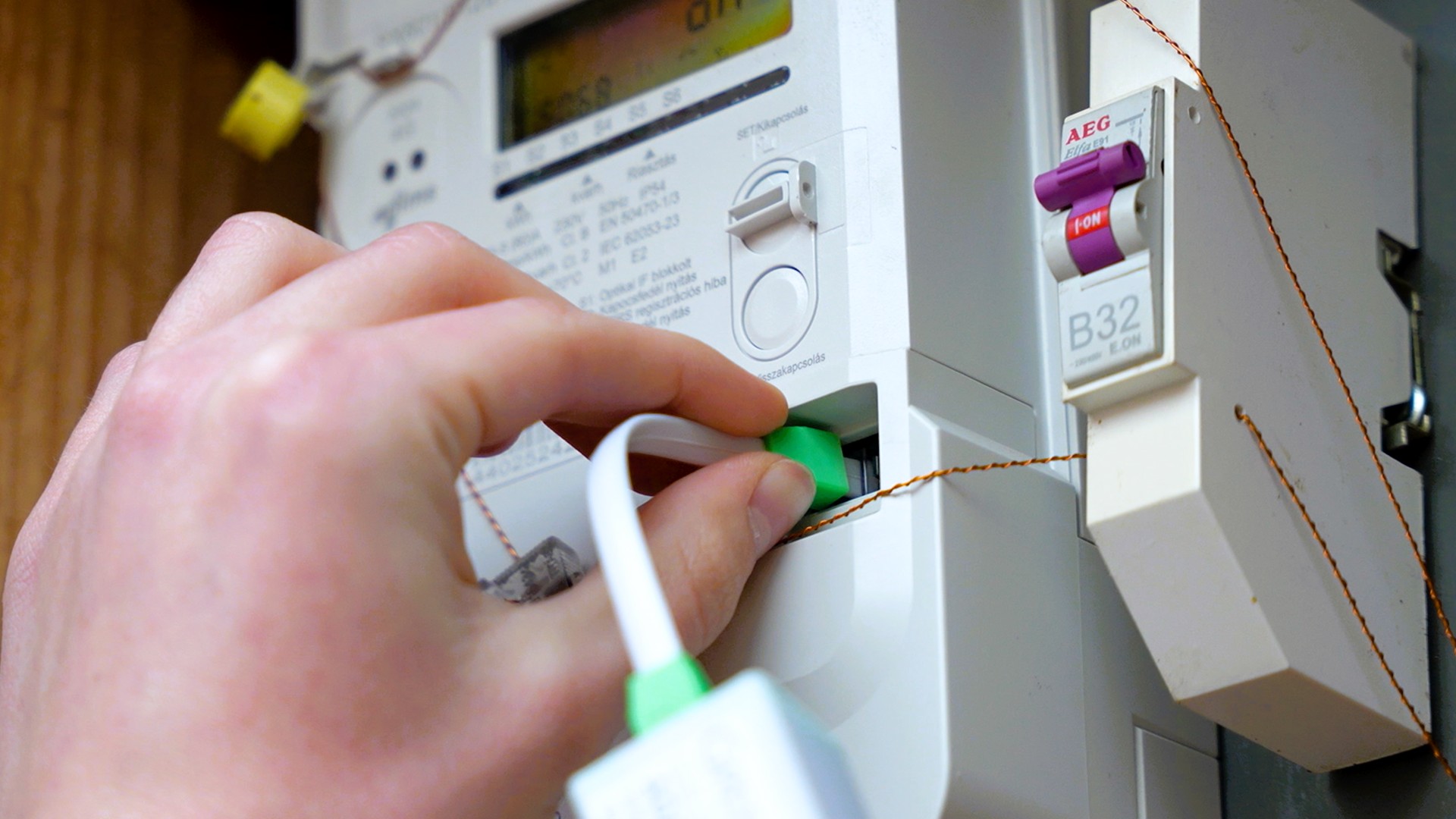
1. Myth: “The electric meter cheats so we pay more.”
The reality: The meter can malfunction, but it doesn’t cheat.
The electric meter is not a device that “intentionally works against you,” but a certified measuring instrument. This is a very important distinction. If an abnormality occurs, it should not be interpreted as the meter “cheating,” but rather that some technical fault, connection issue, or unexpected consumer phenomenon may be behind it.
The fact: A modern digital meter does not usually measure a little more unnoticed for months on end just like that. If a real fault appears, it usually comes with some clear irregularity: an error message, unrealistic data, stoppage, or suspicious operating pattern.
In practice: Often the meter is not faulty, but a hidden consumer, a faulty boiler, heating element, air conditioner, bad timing, or a device that constantly loads the system without the user’s knowledge.
The solution: The ADA P1 Meter continuously makes the current power, phase data, and energy flow visible. Thus, you can investigate based on data instead of suspicion.
2. Myth: “It’s forbidden to plug anything into a sealed cabinet because it’s considered electricity theft.”
The reality: The P1 port is an official user data interface.
This is one of the most common misunderstandings. The P1 port is not some “backdoor,” nor a DIY connector placed there for makeshift purposes, but a user interface designed as part of the meter.
The fact: The P1 port is a read-only data interface. You cannot write into the meter through it, cannot modify the billing, and cannot “hack” the meter with it.
The essence: Using the P1 port is not the same as tampering with the meter seal. Many confuse these two things.
Important difference: Touching the seal is one thing, reading data on a user interface designed for this purpose is another.
3. Myth: “If the port is sealed, I can’t use the ADA P1 Meter.”
The reality: You should not seek an illegal solution, but request legal access.
It does happen that due to the design of the meter cabinet, the user physically cannot reach the P1 port. However, this does not mean the use of the P1 is prohibited, but that the access is not properly provided.
The solution: The correct approach is to request access to the P1 port from the distribution licensee.
The important message: You should not “sneak” a seal break, but officially signal that the user wishes to make use of the data access opportunity.
In practice: Often this is not a big deal, just a matter of setting a suitable access point or a one-time provider intervention.
It is worth careful wording here: the claim isn’t that service providers are automatically obliged to modify anything in every case, but that the user can legitimately initiate the arrangement of access to use the P1 port.
4. Myth: “The service provider will punish me if they notice the P1 meter.”
The reality: A properly connected, read-only device is not prohibited.
Many still think that any device near the meter is automatically suspicious. But the data reader connected to the P1 port is a completely different category.
The essence: If the device connects to the user port, doesn’t damage, doesn’t break seals, and does not interfere with meter operation, it is not electricity theft.
Safety: The ADA P1 Meter operates on this principle: it reads data but does not modify.
The rule of common sense: What only reads is not the same as what interferes.
5. Myth: “The meter display is enough, everything can be seen from it anyway.”
The reality: The display is insufficient, time series data tell much more.
The meter display usually shows only a few alternating values. This is good for providing a snapshot but insufficient to truly understand what happens in your home network.
The display shows something.
The P1 data stream shows the process.
This is a huge difference. Most problems cannot be recognized based only on a single number, but by how values change over time.
6. Myth: “The P1 port is only for professionals.”
The reality: It is actually most useful for everyday users.
The P1 port is not only interesting for engineers or electricians. In fact, its greatest value is often for those who simply want to know:
why the bill got higher,
when a big consumer starts,
how the solar system is producing,
in which time of day consumption increases,
and whether the house really consumes as much as was thought.
Good energy use is based not on guesswork, but on transparency.
7. Myth: “P1 data is the same as official billing.”
The reality: P1 data is a very useful checking and information source, but the official billing basis remains the official meter register.
This is an important clarification. The P1 port provides extremely valuable data, but the official billing basis is not represented by an external display or app.
What is it good for? Checking, reviewing, analysis, troubleshooting, conscious consumption.
What is it not good for? To replace the official billing system by itself.
Because of this, it is a powerful tool: it helps to notice discrepancies in time before the user faces them only in the bill.
Summary: What should you do?
Conscious energy use is based on measurement and transparency. It’s not worth relying on myths.
Check if your meter has a P1 port.
If the port is physically inaccessible, request proper access from the distributor.
Use a device that only reads and does not interfere.
Don’t guess: look at the data.
The ADA P1 Meter and hmke.app help you not only try to decode what happened from the end-of-month bill but also understand your home’s energy flows in real time.
The electric meter is therefore not an enemy, nor a mysterious black box. Much more, it is a data source to which the user has both the right and interest to connect — legally, safely, and understandably.